

EFFECTIVE COMMUNICATION

PROGRAM OBJECTIVE
This course is designed to transform participants into highly competent, adaptable communicators capable of navigating complex professional and personal landscapes. By exploring the core mechanics of human interaction, learners will transition from passive message transmitters to strategic communicators who can minimize misunderstandings and bridge cultural or psychological gaps. Through structured frameworks covering psychological safety, the 7 Cs of communication, and channel selection, the primary objective is to equip participants with the foundational tools necessary to deliver clear, intentional, and high-impact messages across diverse written and verbal mediums.
The Modules are as follows:
- The Communication Process: Understanding senders, receivers, encoding, decoding, and feedback loops.
- Barriers to Communication: Identifying and overcoming physical, psychological, and cultural noise.
- Choosing the Right Channel: Matching your message to the correct medium (email, voice, or face-to-face).
- Hearing vs. Listening: Moving from passive sound reception to active cognitive engagement.
- Non-Verbal Cues: Interpreting body language, facial expressions, and tone of voice.
- The Art of Paraphrasing: Using reflection and clarifying questions to confirm understanding.
- The 7 Cs of Communication: Applying clarity, conciseness, concreteness, correctness, consideration, completeness, and courtesy.
- Structuring Your Message: Structuring ideas logically using frameworks like the Pyramid Principle.
- Professional Email Etiquette: Writing impactful subject lines, clear calls to action, and appropriate tones.
- Communication Styles: Distinguishing between passive, aggressive, passive-aggressive, and assertive behaviours.
- The "I" Statement Technique: Expressing needs and boundaries firmly without creating defensiveness.
- Persuasion and Trust: Building credibility and using logical frameworks to influence others.
- De-escalation Strategies: Managing high emotions and cooling down heated workplace interactions.
- The Interest-Based Relational Approach: Separating people from problems to find win-win solutions.
- Constructive Feedback Delivery: Using models like the "Feedback Sandwich" or SBI (Situation-Behaviour-Impact).
- Psychological Safety in Teams: Creating environments where open, honest communication thrives.
- Presentation Mechanics: Managing stage fright, pacing, vocal variety, and visual aids.
- Running Productive Meetings: Setting clear agendas, managing time, and documenting actionable next steps.
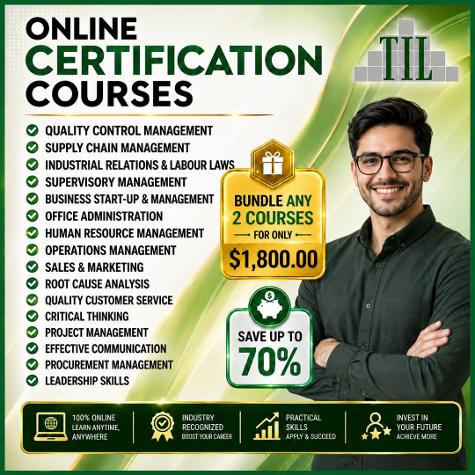
Program Cost
Total Fee: $1,400.00
Duration
6 weeks
Class Schedule
Start Date: Wednesday October 07th , 2026
Days and Times: Wednesdays only 6:00 pm - 7:00 pm
TECHNICAL INSTITUTE FOR LEARNING LIMITED
#4 Bertrand Street
San Fernando
Trinidad & Tobago
Email: info@tiltnt.com
Phone:
868-283-3757
868-796-0593
868-653-2583